How to Fix Network 'No Route to Host' Errors on Linux
'No route to host' (Errno 113, EHOSTUNREACH) means a message came back saying the host can't be reached, or your own machine found nobody at that address. On four real Linux machines we find who said no each time: firewalld rejecting a port (and the rule lost on reload without --permanent), a moved address nobody answers, and a router reporting a PC that's off, plus how 'Network is unreachable' differs.
No route, but ping answers
Your app says: no route to host. Sarah has the same problem. She works at a freight yard, and her screen asks a server called tracker where the railcars are. It gets error one thirteen: no route to host. But ping, which sends two quick are-you-there messages, gets both answers back in a tenth of a millisecond. So is there a route or not? Three different machines can say no, and each one has a short fix. And one of them is a machine Sarah never even talked to.
python3 cars.pyTraceback (most recent call last):
  File "/usr/lib/python3.12/urllib/request.py", line 1344, in do_open
    h.request(req.get_method(), req.selector, req.data, headers,
  File "/usr/lib/python3.12/http/client.py", line 1365, in request
    self._send_request(method, url, body, headers, encode_chunked)
  File "/usr/lib/python3.12/http/client.py", line 1411, in _send_request
    self.endheaders(body, encode_chunked=encode_chunked)
  File "/usr/lib/python3.12/http/client.py", line 1360, in endheaders
    self._send_output(message_body, encode_chunked=encode_chunked)
  File "/usr/lib/python3.12/http/client.py", line 1120, in _send_output
    self.send(msg)
  File "/usr/lib/python3.12/http/client.py", line 1064, in send
    self.connect()
  File "/usr/lib/python3.12/http/client.py", line 1030, in connect
    self.sock = self._create_connection(
                ^^^^^^^^^^^^^^^^^^^^^^^^
  File "/usr/lib/python3.12/socket.py", line 852, in create_connection
    raise exceptions[0]
  File "/usr/lib/python3.12/socket.py", line 837, in create_connection
    sock.connect(sa)
OSError: [Errno 113] No route to host

During handling of the above exception, another exception occurred:

Traceback (most recent call last):
  File "/home/sarah/cars.py", line 5, in <module>
    with urllib.request.urlopen("http://tracker:8080/cars", timeout=10) as r:
         ^^^^^^^^^^^^^^^^^^^^^^^^^^^^^^^^^^^^^^^^^^^^^^^^^^^^^^^^^^^^^^
  File "/usr/lib/python3.12/urllib/request.py", line 215, in urlopen
    return opener.open(url, data, timeout)
           ^^^^^^^^^^^^^^^^^^^^^^^^^^^^^^^
  File "/usr/lib/python3.12/urllib/request.py", line 515, in open
    response = self._open(req, data)
               ^^^^^^^^^^^^^^^^^^^^^
  File "/usr/lib/python3.12/urllib/request.py", line 532, in _open
    result = self._call_chain(self.handle_open, protocol, protocol +
             ^^^^^^^^^^^^^^^^^^^^^^^^^^^^^^^^^^^^^^^^^^^^^^^^^^^^^^^
  File "/usr/lib/python3.12/urllib/request.py", line 492, in _call_chain
    result = func(*args)
             ^^^^^^^^^^^
  File "/usr/lib/python3.12/urllib/request.py", line 1373, in http_open
    return self.do_open(http.client.HTTPConnection, req)
           ^^^^^^^^^^^^^^^^^^^^^^^^^^^^^^^^^^^^^^^^^^^^^
  File "/usr/lib/python3.12/urllib/request.py", line 1347, in do_open
    raise URLError(err)
urllib.error.URLError: <urlopen error [Errno 113] No route to host>
ping -c 2 trackerPING tracker (192.168.70.10) 56(84) bytes of data.
64 bytes from tracker (192.168.70.10): icmp_seq=1 ttl=64 time=0.119 ms
64 bytes from tracker (192.168.70.10): icmp_seq=2 ttl=64 time=0.246 ms

--- tracker ping statistics ---
2 packets transmitted, 2 received, 0% packet loss, time 1028ms
rtt min/avg/max/mdev = 0.119/0.182/0.246/0.063 ms
Who says there's no route?
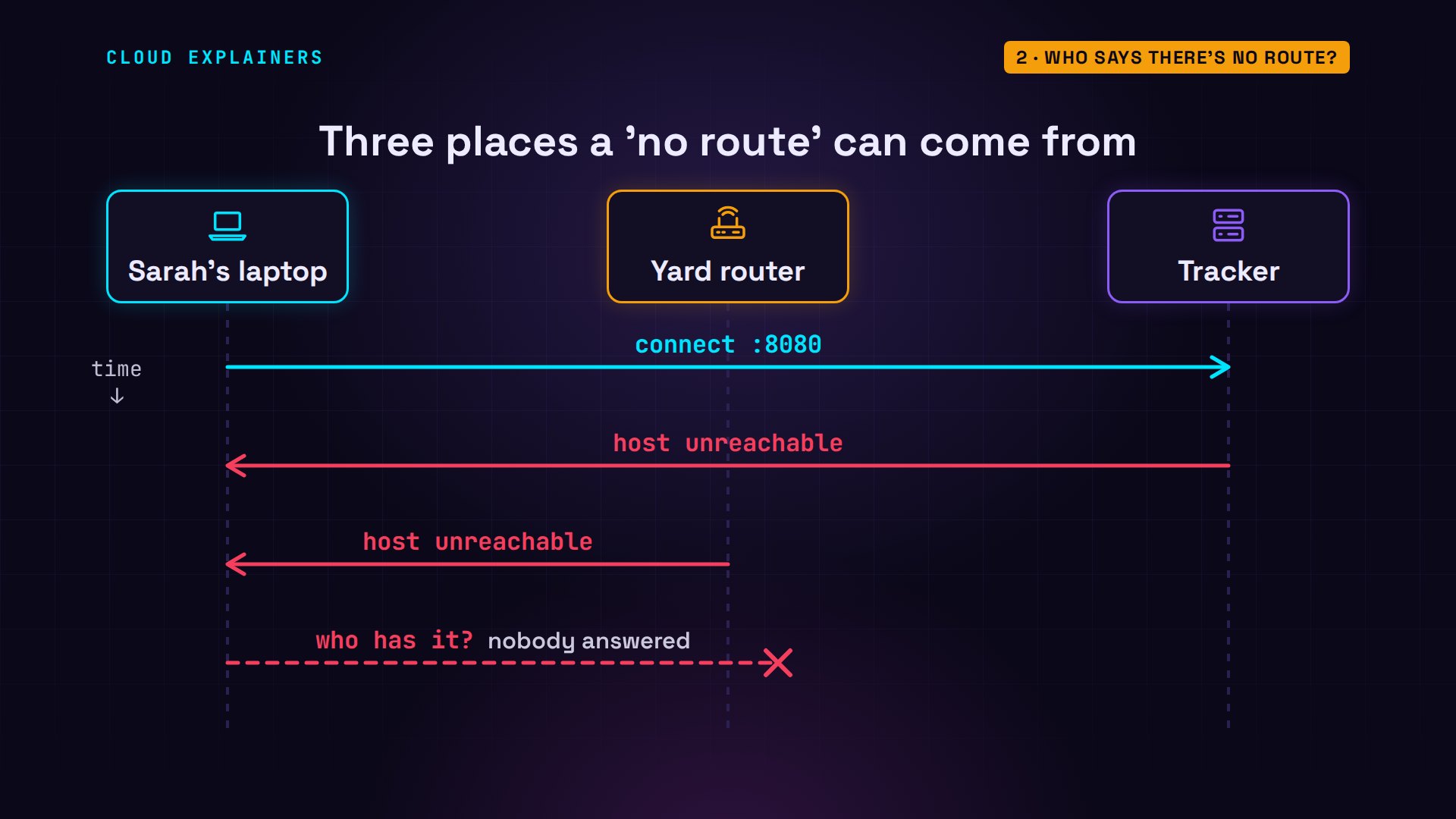
No route to host means some machine told your laptop it can't get there. It could be the host itself, a router on the way, or your own laptop, when it calls out and nobody answers. Let's catch which one is talking to Sarah.
A firewall that says unreachable
Sarah logs in to the tracker over ssh and runs tcpdump, which prints every message that arrives. From her laptop, netcat, a tool that only tries to connect, knocks on port eighty-eighty, the numbered door the tracker app listens behind. The request comes in, and the tracker itself answers: host unreachable, admin prohibited filter. A firewall, pretending the machine isn't there.
[sarah@tracker ~]$ sudo tcpdump -nni eth0 -c 2 'tcp port 8080 or icmp'dropped privs to tcpdump
tcpdump: verbose output suppressed, use -v[v]... for full protocol decode
listening on eth0, link-type EN10MB (Ethernet), snapshot length 262144 bytes
14:55:45.828238 IP 192.168.70.20.53110 > 192.168.70.10.8080: Flags [S], seq 2262581591, win 64240, options [mss 1460,sackOK,TS val 586240480 ecr 0,nop,wscale 10], length 0
14:55:45.828306 IP 192.168.70.10 > 192.168.70.20: ICMP host 192.168.70.10 unreachable - admin prohibited filter, length 68
2 packets captured
2 packets received by filter
0 packets dropped by kernel
nc -vz tracker 8080nc: connect to tracker (192.168.70.10) port 8080 (tcp) failed: No route to host
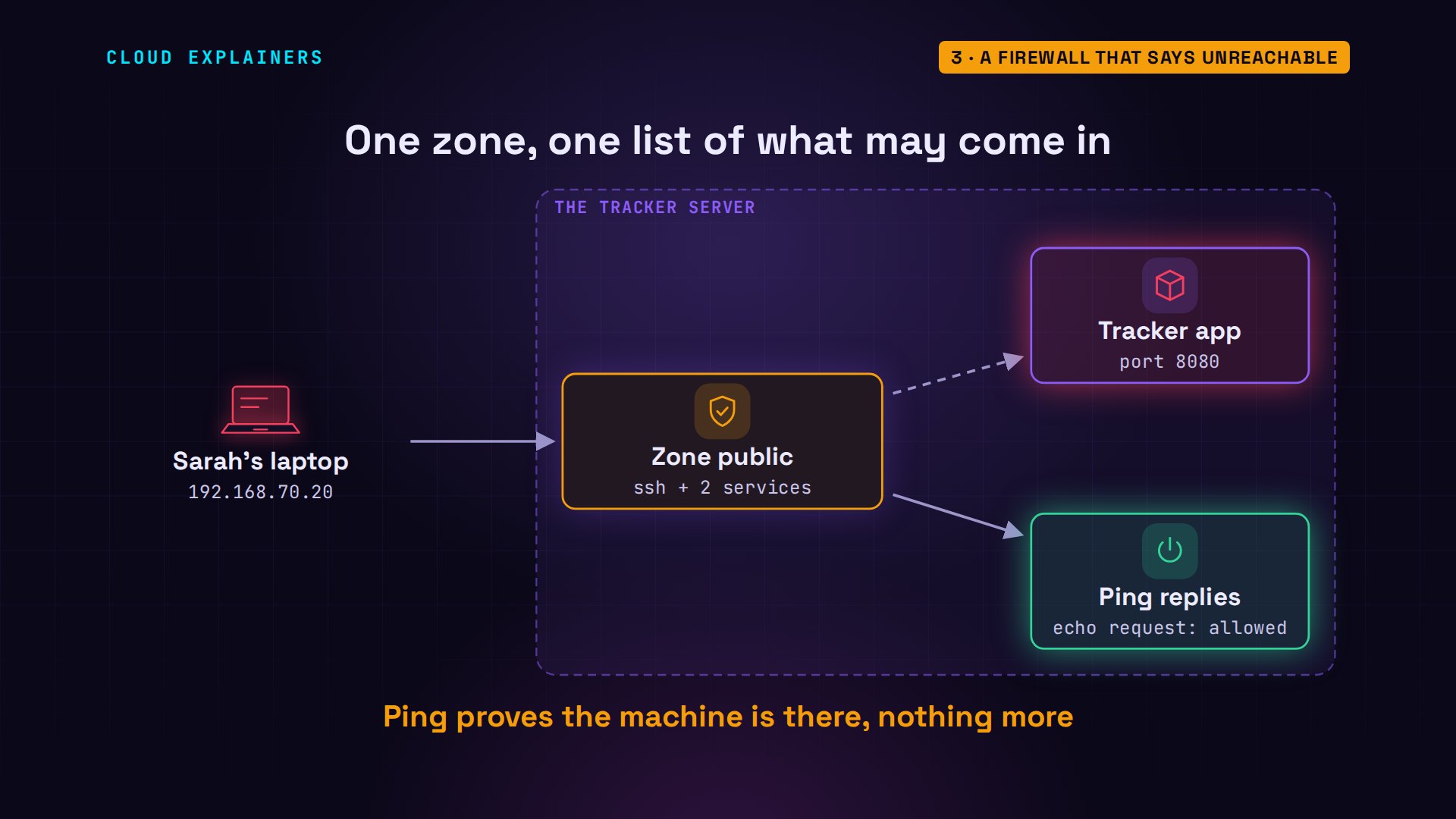
So, the usual fix: open the port. The tracker runs Rocky Linux, where the firewall, firewalld, is on from the start. Sarah lists what it lets in: a few services by name, like ssh, and no port numbers at all. She adds port eighty-eighty for TCP, the kind of connection most apps use. The firewall answers: success. The yard screen asks again: track three, twelve cars. For a well-known service, like ssh or http, dash dash add-service does the same by name.
[sarah@tracker ~]$ sudo firewall-cmd --list-allpublic
  target: default
  icmp-block-inversion: no
  interfaces:
  sources:
  services: cockpit dhcpv6-client ssh
  ports:
  protocols:
  forward: yes
  masquerade: no
  forward-ports:
  source-ports:
  icmp-blocks:
  rich rules:
[sarah@tracker ~]$ sudo firewall-cmd --add-port=8080/tcpsuccess
python3 cars.pytrack 3: 12 cars
track 5: 8 cars
track 7: 15 cars
But why did ping get through? firewalld groups its rules into zones, and the tracker's network card sits in the zone called public. That zone keeps a list of what may come in: a few services, and ping's are-you-there messages. Anything not on the list is turned away. Here it's turned away politely, with the message we caught earlier: admin prohibited. Your laptop shows that as no route to host. So ping proves the machine is there. It says nothing about port eighty-eighty.
Gone after a reload
That evening, Chris, who looks after the yard's servers, reloads the firewall after another change. Guess first: does the yard screen still work? No. Error one thirteen is back. The port Sarah added lived only in the firewall's running rules.
[sarah@tracker ~]$ sudo firewall-cmd --reloadsuccess
python3 cars.pyTraceback (most recent call last):
  File "/usr/lib/python3.12/urllib/request.py", line 1344, in do_open
    h.request(req.get_method(), req.selector, req.data, headers,
  File "/usr/lib/python3.12/http/client.py", line 1365, in request
    self._send_request(method, url, body, headers, encode_chunked)
  File "/usr/lib/python3.12/http/client.py", line 1411, in _send_request
    self.endheaders(body, encode_chunked=encode_chunked)
  File "/usr/lib/python3.12/http/client.py", line 1360, in endheaders
    self._send_output(message_body, encode_chunked=encode_chunked)
  File "/usr/lib/python3.12/http/client.py", line 1120, in _send_output
    self.send(msg)
  File "/usr/lib/python3.12/http/client.py", line 1064, in send
    self.connect()
  File "/usr/lib/python3.12/http/client.py", line 1030, in connect
    self.sock = self._create_connection(
                ^^^^^^^^^^^^^^^^^^^^^^^^
  File "/usr/lib/python3.12/socket.py", line 852, in create_connection
    raise exceptions[0]
  File "/usr/lib/python3.12/socket.py", line 837, in create_connection
    sock.connect(sa)
OSError: [Errno 113] No route to host

During handling of the above exception, another exception occurred:

Traceback (most recent call last):
  File "/home/sarah/cars.py", line 5, in <module>
    with urllib.request.urlopen("http://tracker:8080/cars", timeout=10) as r:
         ^^^^^^^^^^^^^^^^^^^^^^^^^^^^^^^^^^^^^^^^^^^^^^^^^^^^^^^^^^^^^^
  File "/usr/lib/python3.12/urllib/request.py", line 215, in urlopen
    return opener.open(url, data, timeout)
           ^^^^^^^^^^^^^^^^^^^^^^^^^^^^^^^
  File "/usr/lib/python3.12/urllib/request.py", line 515, in open
    response = self._open(req, data)
               ^^^^^^^^^^^^^^^^^^^^^
  File "/usr/lib/python3.12/urllib/request.py", line 532, in _open
    result = self._call_chain(self.handle_open, protocol, protocol +
             ^^^^^^^^^^^^^^^^^^^^^^^^^^^^^^^^^^^^^^^^^^^^^^^^^^^^^^^
  File "/usr/lib/python3.12/urllib/request.py", line 492, in _call_chain
    result = func(*args)
             ^^^^^^^^^^^
  File "/usr/lib/python3.12/urllib/request.py", line 1373, in http_open
    return self.do_open(http.client.HTTPConnection, req)
           ^^^^^^^^^^^^^^^^^^^^^^^^^^^^^^^^^^^^^^^^^^^^^
  File "/usr/lib/python3.12/urllib/request.py", line 1347, in do_open
    raise URLError(err)
urllib.error.URLError: <urlopen error [Errno 113] No route to host>
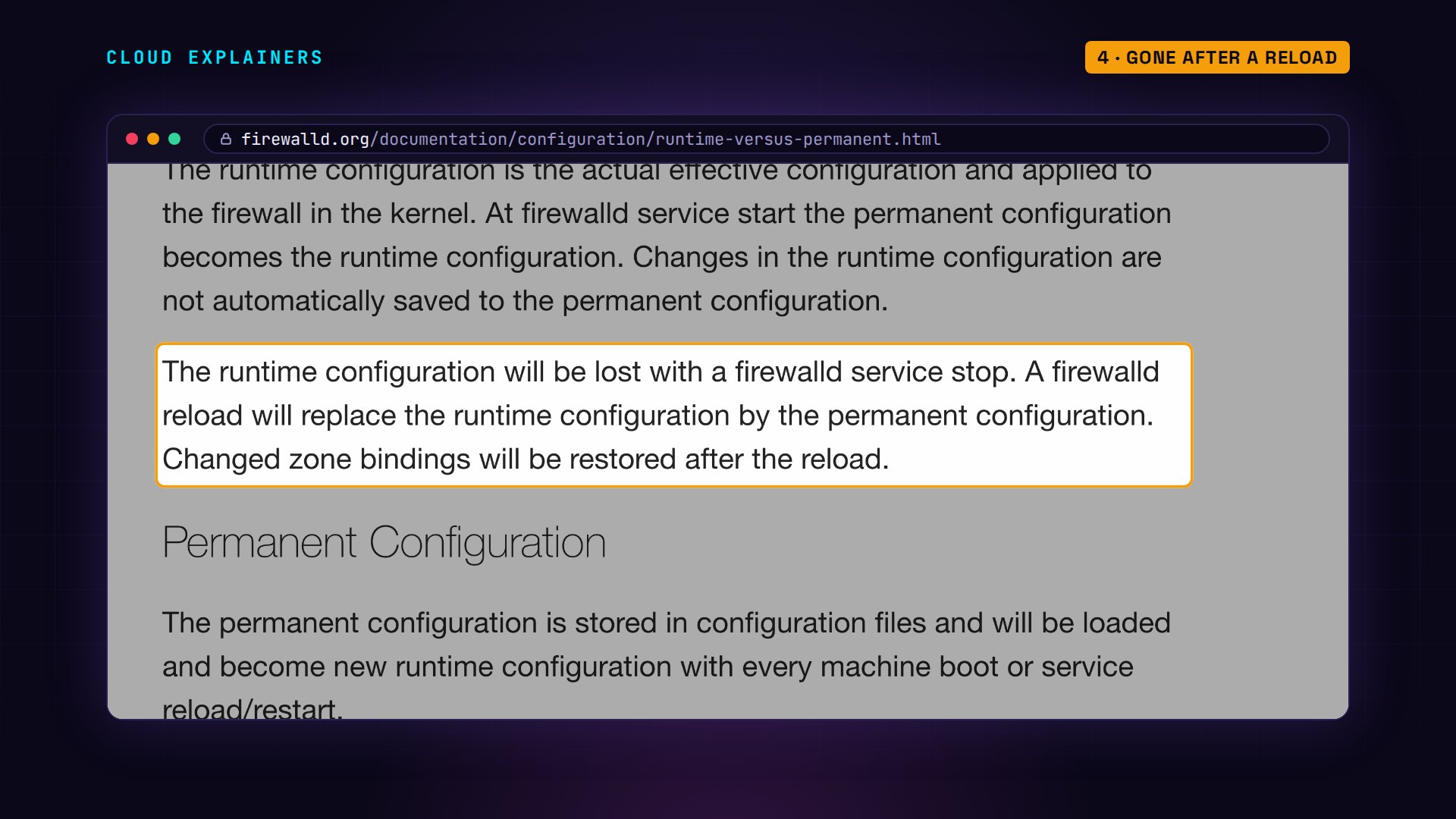
firewalld's own documentation explains it. The runtime configuration is what's in effect right now, and a reload replaces it with the permanent one. So a rule added without dash dash permanent is gone after a reload, or a reboot.
So Sarah adds it with dash dash permanent. That only writes the saved rules, so she reloads to make them live. list-ports shows eighty-eighty, and the yard screen works, now and after the next reboot. If you've already opened ports the quick way, dash dash runtime-to-permanent saves everything that's running now.
[sarah@tracker ~]$ sudo firewall-cmd --permanent --add-port=8080/tcpsuccess
[sarah@tracker ~]$ sudo firewall-cmd --reloadsuccess
[sarah@tracker ~]$ sudo firewall-cmd --list-ports8080/tcp
python3 cars.pytrack 3: 12 cars
track 5: 8 cars
track 7: 15 cars
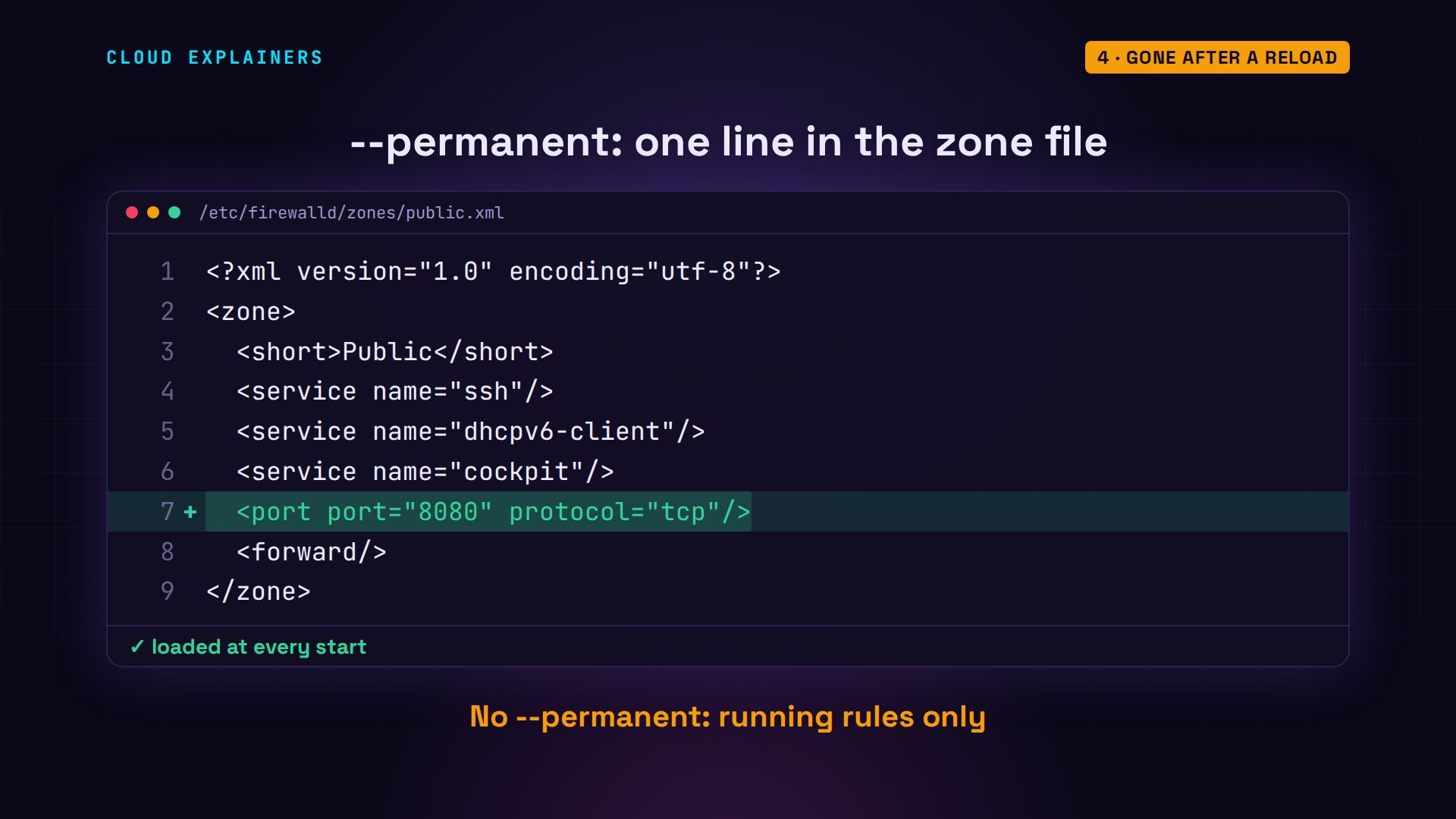
Those saved rules live in the public zone's file, under slash etc slash firewalld. It gets one new line: port eighty-eighty, TCP. The firewall reads that file every time it starts.
Nobody at that address
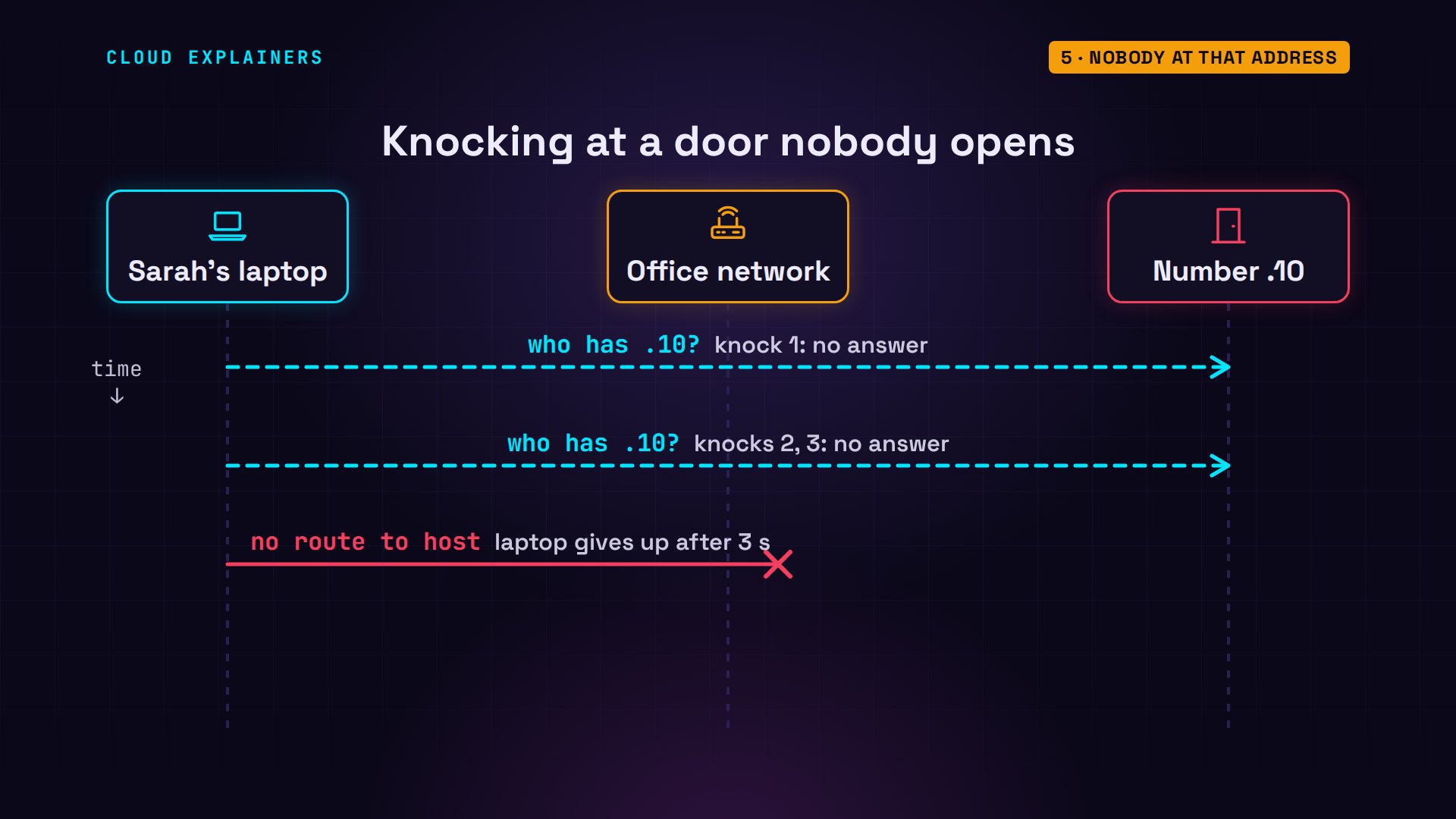
Monday morning: the same error, but slower. Over the weekend, Chris moved the tracker from its old address, ending in dot ten, to a new one ending in dot eleven. netcat waits three seconds before it says no route to host. Inside one network, your laptop can't just send to an address. It first has to find the network card that owns it. So it shouts: who has dot ten? That shout is called ARP. ip neigh shows the answer it got: none. Failed.
time nc -vz -w 10 tracker 8080nc: connect to tracker (192.168.70.10) port 8080 (tcp) failed: No route to host

real	0m3.050s
user	0m0.000s
sys	0m0.001s
ip neigh show 192.168.70.10192.168.70.10 dev eth0 FAILED
It's like a courier knocking at number ten on your own street. Nobody opens, so after a few knocks the parcel comes back marked: can't deliver. Nobody refused it. There's simply nobody at that door.
Ping now says: destination host unreachable. Guess first: which machine sent that? Sarah's own laptop, the one that shouted for dot ten and got no answer. getent, which looks up a name the same way apps do, shows why it asked for dot ten: the laptop's hosts file, its own little address book, still maps the name tracker there. sed, a find-and-replace tool, swaps in dot eleven, and the screen works.
ping -c 3 trackerPING tracker (192.168.70.10) 56(84) bytes of data.
From yard-office (192.168.70.20) icmp_seq=1 Destination Host Unreachable
From yard-office (192.168.70.20) icmp_seq=2 Destination Host Unreachable
From yard-office (192.168.70.20) icmp_seq=3 Destination Host Unreachable

--- tracker ping statistics ---
3 packets transmitted, 0 received, +3 errors, 100% packet loss, time 2040ms
pipe 3
getent hosts tracker192.168.70.10 tracker
sudo sed -i 's/^192.168.70.10/192.168.70.11/' /etc/hosts
python3 cars.pytrack 3: 12 cars
track 5: 8 cars
track 7: 15 cars
A machine behind the router
Here's the no from a machine Sarah never talked to. The scale house PC sits on another network, and the yard's router passes Sarah's traffic across to it. First, curl, a tool that fetches web pages, asks the PC for its page, and it answers with the last weight. Then the PC is switched off for the night, and netcat waits three seconds: no route to host. Ping says who: the yard router. It knocked on the PC's door for Sarah, got no answer, and sent the message back.
curl -s http://scale/Last weight: car 4417, 61.2 tonnes
time nc -vz -w 10 scale 80nc: connect to scale (10.20.0.5) port 80 (tcp) failed: No route to host

real	0m3.098s
user	0m0.001s
sys	0m0.000s
ping -c 3 scalePING scale (10.20.0.5) 56(84) bytes of data.
From yard-router (192.168.70.1) icmp_seq=1 Destination Host Unreachable
From yard-router (192.168.70.1) icmp_seq=2 Destination Host Unreachable
From yard-router (192.168.70.1) icmp_seq=3 Destination Host Unreachable

--- scale ping statistics ---
3 packets transmitted, 0 received, +3 errors, 100% packet loss, time 2041ms
pipe 3
Not the same: network unreachable
Sometimes the error looks almost the same, network is unreachable, and every fix so far will fail on it. Every machine needs a gateway: the router it hands traffic to when the address is on another network. Say Sarah's laptop gets its address typed in by hand, and nobody sets the gateway. netcat fails at once. ip route lists only one road: the office network. Then ip route get asks: which road would you take to the scale house PC? There's no answer at all. The fix is to give her laptop its gateway back: a default route via the yard router. With that in place, the weight comes back.
nc -vz scale 80nc: connect to scale (10.20.0.5) port 80 (tcp) failed: Network is unreachable
ip route192.168.70.0/24 dev eth0 proto kernel scope link src 192.168.70.20
ip route get 10.20.0.5RTNETLINK answers: Network is unreachable
sudo ip route add default via 192.168.70.1
ip route get 10.20.0.510.20.0.5 via 192.168.70.1 dev eth0 src 192.168.70.20 uid 1000
    cache
curl -s http://scale/Last weight: car 4417, 61.2 tonnes
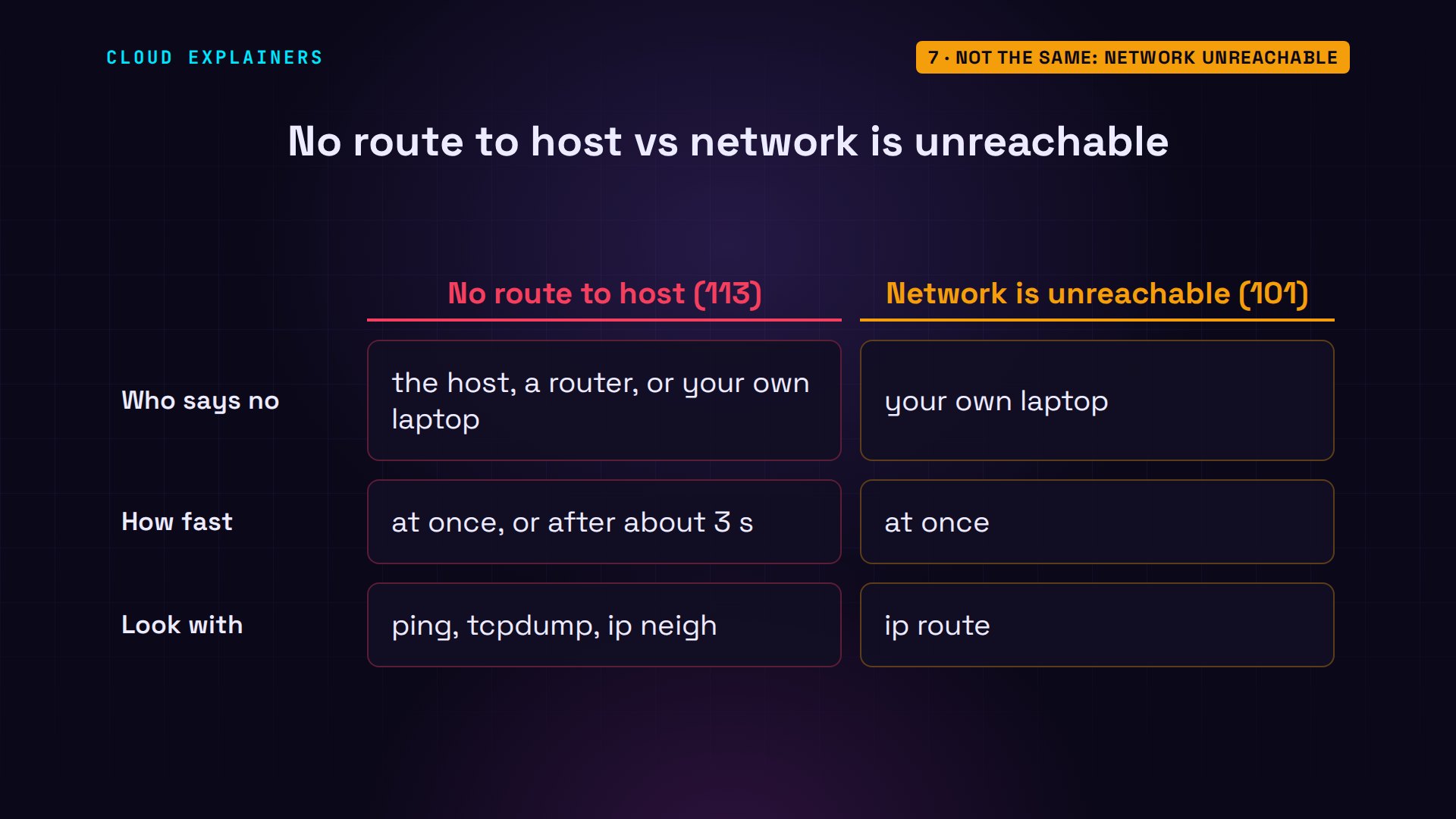
So: no route to host means your machine knew where to send it, and something along the way said the host can't be reached. Network is unreachable means your own machine doesn't know where to send it at all.
Before you call it fixed
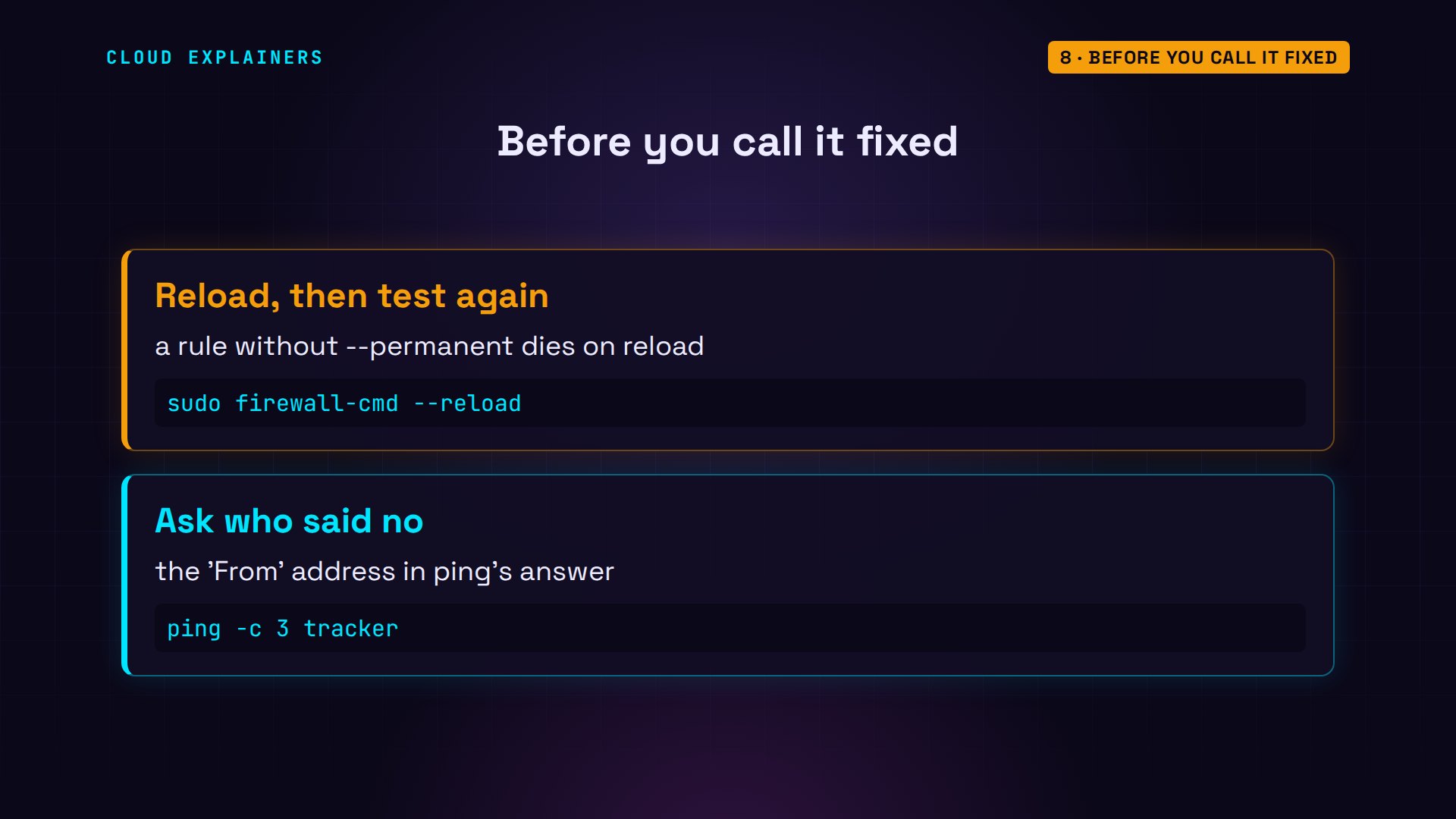
Before you call it fixed, reload the firewall or reboot, then test again. Test from another machine, because the firewall only checks traffic from outside. And if the error comes back, ask who said no.
Recap
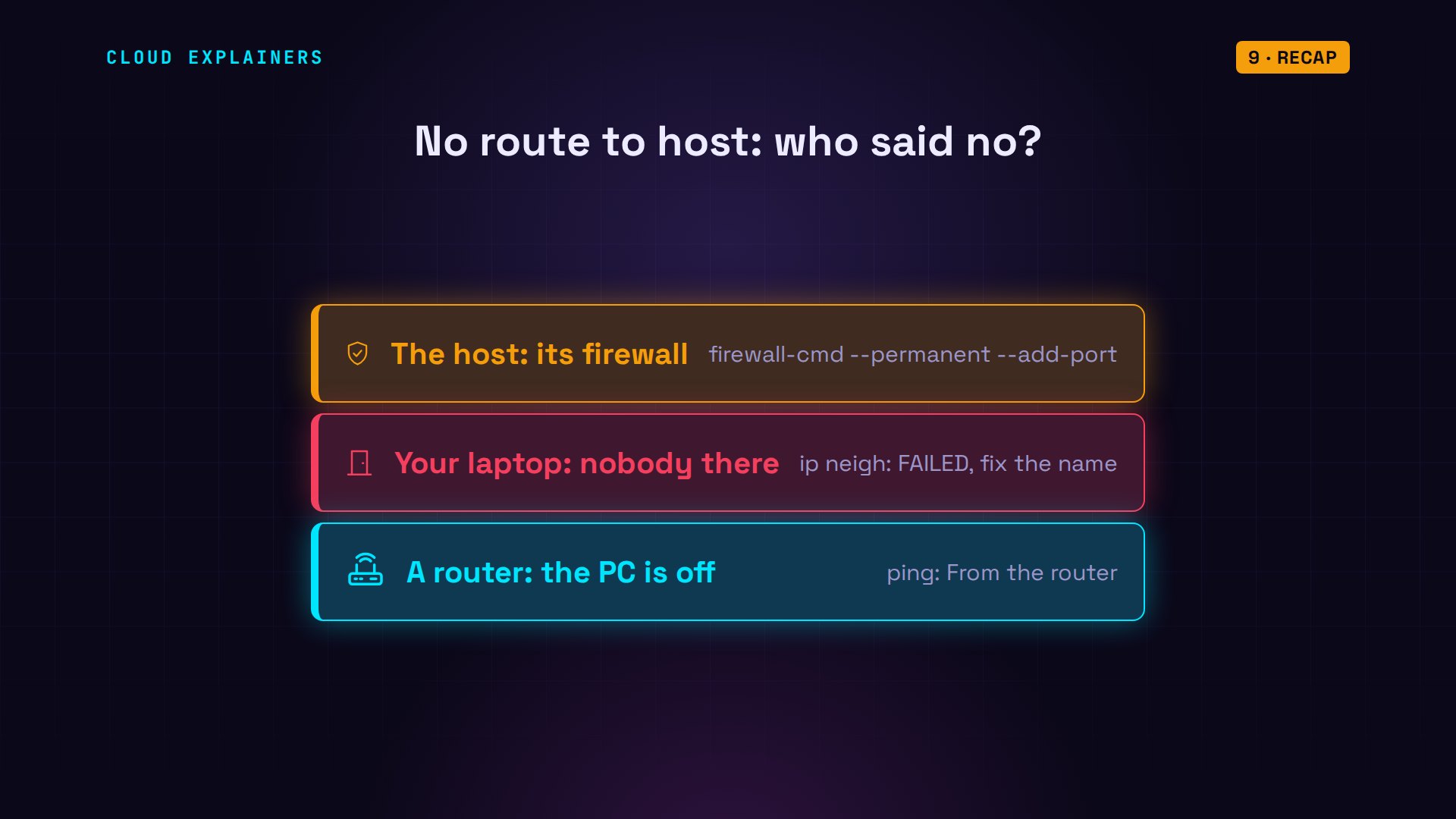
So, no route to host: a firewall answering for the host, an address nobody has, or a router reporting a machine that's off. And when it comes back, ping tells you who said no.
If your yard screen finds its tracker again, a like helps the next stuck beginner find this, and subscribing brings more fixes, tested on real machines.
Every error in this video came from four real Linux machines, and every command and the lab files are linked in the description. Thanks for watching Cloud Explainers.
Sources
- connect(2): EHOSTUNREACH and ENETUNREACH
- firewalld, Runtime versus Permanent (a reload replaces the runtime configuration with the permanent one)
- firewall-cmd(1): --add-port, --permanent, --reload, --list-all, --list-ports
- firewalld.zone(5): a zone's default target rejects other traffic with an ICMP host prohibited message
- RFC 1122, Requirements for Internet Hosts (a router that can't deliver a packet sends ICMP destination unreachable)
- ip-neighbour(8): FAILED, the neighbour did not answer
- ip-route(8): ip route, ip route get, default via
Demos: four containers on our own Mac standing in for a freight yard's laptop, tracker server, router and scale house PC; the yard and its staff are made up. Every error and packet was real. Watch the full video on YouTube.
More videos

Every PostgreSQL Setting to Change After You Install It

What Happens When You Install Docker on Ubuntu

How to Fix Python 'Address Already in Use' Errors
Golang Interfaces and Mocks in 5 Minutes

How to Fix Git 'Detached HEAD' State
Linux Firewall with ufw: Full Tutorial for Beginners
Golang defer Statements in 5 Minutes
How to Fix OAuth 'invalid_grant' Errors

The SQL Roadmap for Beginners
Golang make() for Slices and Maps in 5 Minutes

How to Fix Linux 'Too Many Open Files' Errors

Every Django Concept a Beginner Needs to Know
SSH on Linux: Full Tutorial for Beginners

Golang for range Loops in 5 Minutes

SQL Databases: SQLite vs PostgreSQL
The Django Roadmap for Beginners

Golang Structs in 5 Minutes

Redis: Full Tutorial for Beginners

Golang context.Context in 5 Minutes
How to Fix MySQL Database Error 1045: Access Denied for User

Golang Method Receivers in 5 Minutes
How to Fix Python SSL: CERTIFICATE_VERIFY_FAILED Errors

How to Fix Django Static Files Not Loading in Production

OpenRouter vs Direct API Keys: Which One Should You Use?
Golang if err != nil Checks in 5 Minutes

How to Fix Golang 'go.mod File Not Found' Errors

MCP Servers: Full Tutorial for Beginners

Golang Error Return Values in 5 Minutes

How to Fix Python ModuleNotFoundError: No Module Named
Golang Pointers in 5 Minutes
How to Fix a Kubernetes Pod Stuck in CrashLoopBackOff
How to Fix a Homelab ESXi Host Not Responding
PostgreSQL: Full Tutorial for Beginners
How a Load Balancer Works with HAProxy

How Python Virtual Environments Work
How to Fix Cloudflare Tunnel Errors in a Homelab
How to Fix API CORS Errors: No 'Access-Control-Allow-Origin'

How Authenticator App Login Codes Work (TOTP)

Git and GitHub: Full Tutorial for Beginners

How a Homelab Hypervisor Works (VMware ESXi)

How to Fix Kubernetes ImagePullBackOff Errors

How to Fix DNS 'Temporary Failure in Name Resolution' on Linux
How to Fix AWS CLI 'Unable to Locate Credentials'

Proxmox vs ESXi for Your Homelab: When Each One Wins
PostgreSQL UUID vs Auto Increment: Which Primary Key Should You Use?
Kubernetes: Full Tutorial for Beginners

How TCP Sockets Work

How to Fix PostgreSQL 'Could Not Connect to Server'
Claude Code Hooks Will Finally Make Sense After This

DevOps with Ansible Will Finally Make Sense After This
How SNMP Network Monitoring Works
How to Fix GitHub 'Permission Denied (publickey)' Errors

Docker: Full Tutorial for Beginners
How to Fix PostgreSQL 'Password Authentication Failed'
Why One Linux Server Handles More Users Than You Think

How to Fix Network 'Connection Refused' Errors
DevOps Pipelines: Jenkins vs GitHub Actions
Linux Nginx Reverse Proxy: Full Tutorial for Beginners
Every Networking Term a Beginner Needs in 12 Minutes
How to Fix Docker 'Permission Denied' on docker.sock
How to Fix Git 'Updates Were Rejected' When You Push
How to Fix nginx 502 Bad Gateway Errors on Linux

How to Fix Linux apt 'Could Not Get Lock' Errors (Ubuntu)

How Email Works on the Internet (SMTP) in 10 Minutes

The Python Roadmap for Beginners

Golang REST API with Gin: Full Tutorial for Beginners
How a WireGuard VPN Network Works

Linux Makefiles Will Finally Make Sense After This

SAML vs OAuth vs OpenID Connect: What's the Difference?

How to Fix Python cron Jobs That Never Run

Linux Bash Scripting: Full Tutorial for Beginners
How PXE Network Boot Works

How Active Directory Works

How to Fix a Linux systemd Service That Won't Start

Linux Logs: syslog vs journald
JWT vs Session Cookies: Which One Should You Use?

Docker vs Docker Compose: Which One Should You Use?
How to Fix Docker Compose Containers That Can't Talk to Each Other

Django Full Tutorial for Beginners

How Linux systemd Works

How to Fix 'Windows Cannot Access' Network Share Errors (SMB)
REST vs gRPC: Which One Should You Use?

How to Fix SSL Certificate Chain Errors (Missing Intermediate)

Every Python Concept for Beginners in 10 Minutes

Every SQL Join Type in 10 Minutes
Why OpenRouter Free Models Hit Their Limit So Fast
Why Your Gemini API Free Tier Runs Out So Fast

OpenRouter Will Finally Make Sense After This
How Redis Caching Works
Gemini API vs Vertex AI: Which One Should You Use?
How to Fix a Leaked Gemini API Key
Why Golang Uses Goroutines Instead of Threads

How to Fix Gemini API Error 429: Resource Exhausted

Claude Token Pricing Will Finally Make Sense After This
Why Python Web Scraping Returns Nothing (and the Fix)

Python uv vs pip: Which One Should You Use?

Python Automation: Full Tutorial for Beginners

How OAuth Login Works

Google AI Studio Will Finally Make Sense After This
What Happens When You Run a Docker Container
How to Fix Claude Code Billing Your API Key Instead of Your Plan
Why Passkeys Can't Be Phished Like Passwords
PowerShell vs Bash: Which One Should You Learn?
The Linux Roadmap for Beginners
Django vs FastAPI: Which One Should You Use?

Why SQLite Is the Most Used Database in the World
How a NoSQL Database Like MongoDB Works

How to Fix Python pip error: externally-managed-environment
How to Fix MySQL Too Many Connections Database Errors
Golang Concurrency Will Finally Make Sense After This
How Amazon S3 Works
How Kubernetes Works

How Git Works
How to Fix Docker Port Already Allocated Errors
How PostgreSQL Works
How to Fix Git Merge Conflicts

How to Fix No Space Left on Device in Linux
How the Internet Works
SQL vs NoSQL: When Each One Wins
How to Fix JWT Token Expired Errors (401 Unauthorized)
Claude API vs Claude Pro: Why Your Subscription Doesn't Include It

Why AI Agent Skills Beat Giant Prompts

Linux Cron Jobs Will Finally Make Sense After This

Security Logs Will Finally Make Sense After This

How to Fix a Security Leak: An API Key Pushed to GitHub
DNS Will Finally Make Sense After This
Never Ignore a Security Update
Two-Factor Authentication Will Finally Make Sense
Never Expose a Database to the Internet
SSH Keys vs Passwords: Which Is Safer for Security?

The 5 Levels of Linux Boot: From Power On to Login
The 5 Levels of Network Firewalls
Password Security: Why Hackers Crack Weak Passwords

Why Your Linux Server Runs Out of Memory
HTTP vs HTTPS: What Actually Changes on Your Network

Every Linux File Permission You Need to Know
Linux Processes vs Threads: When Each One Wins
The OSI Model Will Finally Make Sense After This

The 7 Levels of Git
Every Network Troubleshooting Command You Need
Hashing vs Encryption in Cybersecurity: When Each One Wins
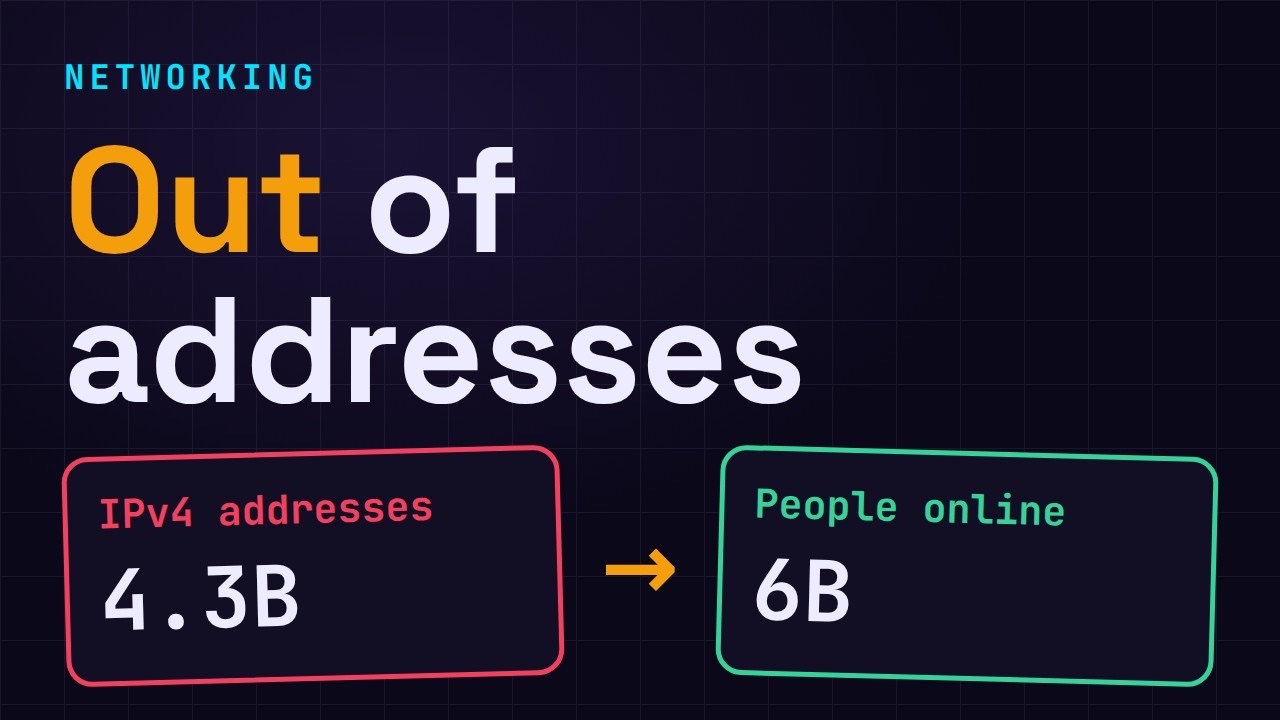
Why the Internet Ran Out of IP Addresses

Linux Package Managers: apt vs Snap vs Flatpak

Why Python Is Slow (and When It Doesn't Matter)
TCP vs UDP: When Each One Wins
Stop Running Linux as Root (Do This Instead)

Linux Users and Groups Will Finally Make Sense

Why Phishing Beats Good Security (and How to Spot It)

The 7 Levels of Docker

AI Agents Will Finally Make Sense After This

Stop Using git push --force (Use This Instead)
Agent Skills vs MCP: When Each One Wins

Networking Will Finally Make Sense After This

Every Linux Command You Actually Need

The 7 Levels of Cybersecurity

Every System Design Concept You Need, in One Diagram